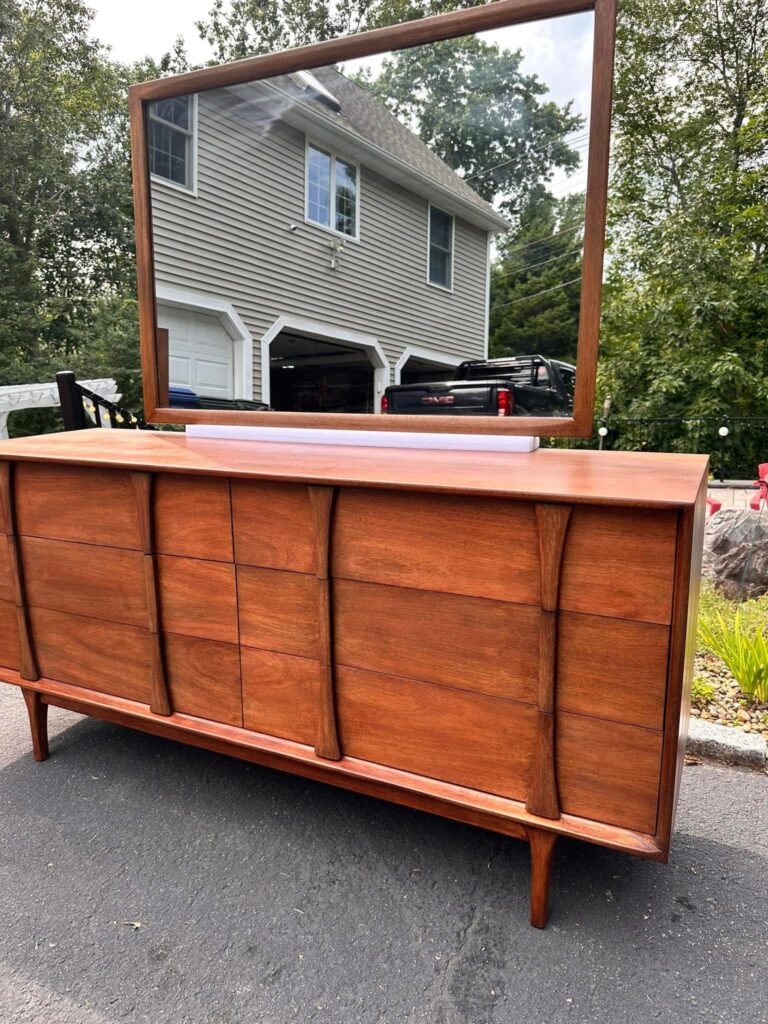
Mid-Century Modern furniture has become increasingly desirable, but restoring it correctly isn’t always as simple as stripping off the old finish and applying a new one.
Pieces from manufacturers such as Lane, Broyhill, Bassett, Drexel and Kent Coffey were produced using specific woods, veneers, colors and finishing techniques that helped create the distinctive appearance we now associate with Mid-Century Modern design.
At Restoration Renew Refresh, Mid-Century Modern Furniture Restoration is one of our specialties.
Veneer Is Common—and That’s Not a Bad Thing
One misconception about vintage furniture is that veneer indicates poor quality.
In reality, many excellent Mid-Century Modern pieces were intentionally constructed using beautiful wood veneers over stable substrates.
Walnut, mahogany, teak and other veneers allowed manufacturers to create consistent grain patterns and distinctive designs that would have been difficult or extremely expensive to produce entirely from solid lumber.
Because veneer can be thin, however, refinishing it requires care.
Careful Veneer Restoration
Aggressive sanding can permanently damage or even sand through the original veneer. Professional restoration techniques help preserve as much of the original material and character as possible.
Preserving the Original Character Matters
Our objective isn’t simply to make an old piece look new.
Whenever appropriate, we want the restored furniture to still look like the piece it was designed to be.
That means considering the original wood species, color, grain and overall appearance before deciding how the piece should be refinished.
Maintaining Authentic Mid-Century Style
Preserving the original character can help maintain the distinctive look and design details that make vintage Mid-Century Modern furniture desirable.
Color Matching Is an Important Part of Restoration
Once an old finish is removed, different sections of a piece don’t always look identical.
Wood ages differently. Previous repairs may be visible. Replacement veneer may be necessary. Solid wood trim and veneered panels may also absorb color differently.
This is where professional color matching becomes important.
Rather than relying on one heavy stain to hide every variation, the finishing process can use multiple techniques to create a more consistent appearance while retaining the natural character of the wood.
Matching Wood, Veneer and Existing Tones
Careful color matching helps different materials and repaired areas blend together while allowing the natural grain of the furniture to remain visible.
Repairs Should Blend Into the Piece
Loose joints, chipped edges, missing veneer and damaged surfaces are common after 50 or 60 years of use.
The objective of a good repair isn’t simply to make the furniture functional again.
Whenever possible, the repair should visually integrate with the surrounding material so it doesn’t become the first thing you notice when looking at the finished piece.
Restoring Damaged Veneer and Surfaces
Depending on the condition of the furniture, restoration may include veneer repair or replacement, structural repairs, edge repairs, scratch removal and other techniques designed to preserve the piece.
The Finish Matters
The final finish protects the restored surface while also determining much of the furniture’s appearance.
Sheen, clarity and color all influence how the grain looks once the restoration is complete.
A properly applied finish should complement the design rather than overpower it.
Choosing the Right Finish
The appropriate finish depends on the furniture’s original appearance, wood species, condition and intended use. The goal is to provide protection while maintaining the character of the piece.
Mid-Century Furniture Can Be Worth Saving
A scratched top, faded finish or damaged veneer can make a beautiful vintage piece look tired and outdated.
But underneath that damage may be furniture with excellent proportions, quality construction and materials that are increasingly difficult to find in new furniture.
Professional Mid-Century Modern Furniture Restoration in Massachusetts
Restoration Renew Refresh provides professional Mid-Century Modern Furniture Restoration in Danvers, Massachusetts, serving the North Shore, Greater Boston and surrounding areas.
If you have a Lane, Broyhill, Bassett, Drexel, Kent Coffey or other vintage piece you’re considering restoring, send us photos to request an estimate.